The Complete Encyclopedia of Quinoa: From Ancient Origins to Modern Superfood
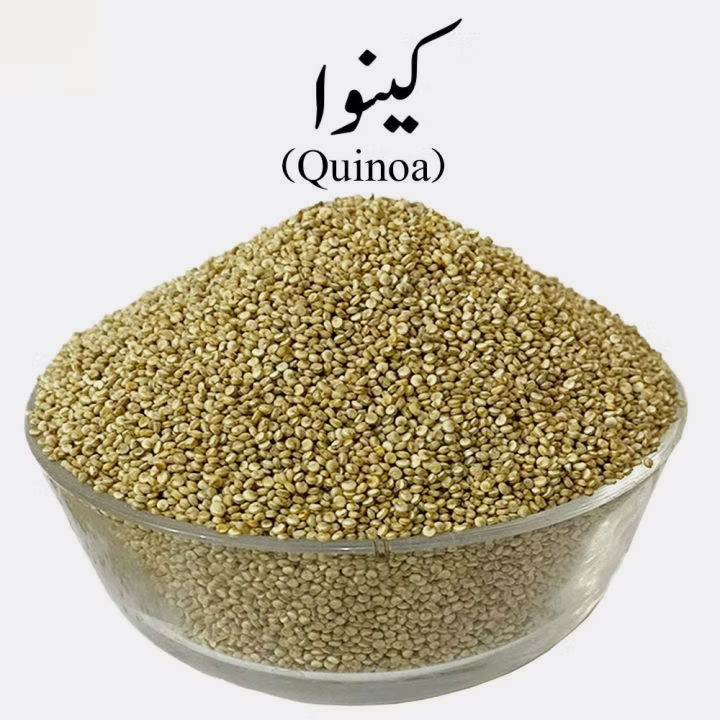
Quinoa (scientific name Chenopodium quinoa), often mistakenly classified as a grain, is actually a “pseudocereal” that has earned the nickname “vegetable caviar” and “mother of grains” due to its extraordinary nutritional value. Native to the Andes region of South America, this plant has a history of several thousand years and is now recognized as one of the main solutions of the United Nations to combat global hunger and climate change.
In this comprehensive article, we will examine all aspects of the quinoa grain, including its history, nutritional value, types, cultivation, medicinal properties, industrial and culinary uses.
1. History and Origin: Inca Heritage
Quinoa has been cultivated for more than 5,000 years in the mountainous regions of the Andes (present-day countries of Peru, Bolivia, Ecuador, Colombia and Chile).
Sacred to the Incas: The Inca civilization revered quinoa as “Chisiya Mama” or “Mother of All Grains.” The Inca emperor would plant the first grain each year with a golden tool.
Spanish Colonial Era: When the Spanish arrived in South America, they banned the cultivation of quinoa, calling it “Indian food,” in an attempt to undermine indigenous culture. They destroyed quinoa fields to replace wheat and barley. However, quinoa was secretly preserved at high altitudes.
Modern Renaissance: In the 1970s and 1980s, Western scientists rediscovered the grain’s nutritional value. 2013 was designated the “International Year of Quinoa” by the United Nations to highlight its role in global food security.
2. Botany and Structure
Quinoa, unlike wheat and rice, is not a member of the Poaceae family, but rather a member of the Amaranthaceae family, and is related to spinach and beets.
Climate Adaptation: Quinoa is an facultative halophyte. It can grow in harsh environmental conditions such as drought, high salinity, frost, and poor soils. This characteristic makes it an ideal choice for agriculture in arid regions (such as Iran and the Middle East).
Saponin: The surface of quinoa seeds is naturally coated with a bitter, soapy substance called saponin. This substance is the plant’s natural defense against birds and insects. In industrial processing, saponin is removed.
3. Types of Quinoa: Andean Rainbow
There are more than 3,000 ecotypes of quinoa, but the three main commercial types are:
3.1. White Quinoa
Characteristics: The most common type on the market. It has a softer and lighter texture.
Flavor: Mild and very slightly nutty.
Uses: Replaces rice, in soups, and as flour for bread. It cooks faster than others (about 15 minutes).
3.2. Red Quinoa
Properties: Holds its shape better after cooking and has a crispier texture.
Taste: Stronger earthy and nutty flavor than the white variety.
Uses: Ideal for cold salads (as it doesn’t get mushy) and grain bowls.
3.3. Black Quinoa
Properties: The rarest commercial variety. Has a crispier texture and a slightly sweeter flavor.
Taste: The earthiest flavor of all quinoa varieties.
Uses: For adding color contrast to dishes and special meals. Takes a little longer to cook.
4. Nutritional Profile: A Complete Powerhouse
Quinoa is one of the few plants that is a complete protein, meaning it contains all 9 essential amino acids.
Nutritional value table (per 100 grams of cooked quinoa):
Nutrient Amount Description
Energy 120 kcal Sustainable energy source
Protein 4.4 g High in lysine and isoleucine
Carbohydrates 21.3 g Low glycemic index (53)
Fiber 2.8 g More than brown rice
Fat 1.9 g Contains omega-3 and omega-6
Magnesium 64 mg 30% Daily Need
Iron 1.5 mg 15% Daily Need
Folate (B9) 42 mcg Essential for blood formation
Gluten-free Completely suitable for celiacs
Bioactive compounds (Phytochemicals):
Quinoa is rich in flavonoids, especially quercetin and kaempferol. Research shows that the concentration of quercetin in quinoa is even higher than in cranberries. These compounds have strong anti-inflammatory, antiviral and anti-cancer effects.

5. Health Benefits and Properties (Based on Scientific Evidence)
5.1. Diabetes and Blood Sugar Control
Due to its low glycemic index (Low GI) and high fiber, quinoa does not cause a sudden increase in blood sugar. Studies have shown that replacing white bread and rice with quinoa can improve insulin sensitivity.
5.2. Cardiovascular Friendly
The soluble fiber in quinoa helps the liver use cholesterol in the blood to produce bile acids, which leads to a decrease in LDL (bad cholesterol) levels. The potassium and magnesium in it also help regulate blood pressure.
5.3. Weight Loss and Slimming
The combination of high protein and fiber increases the feeling of satiety. Quinoa protein helps lose weight by increasing metabolism and reducing the hormone ghrelin (hunger hormone).
5.4. Suitable for Celiacs and Gluten Intolerance
Unlike many commercial “gluten-free” products made from refined starches, quinoa is a naturally gluten-free whole grain that provides essential nutrients for celiacs.
5.5. Digestive Health
Quinoa fiber acts as a prebiotic, feeding beneficial gut bacteria. This helps prevent constipation and reduce the risk of colon cancer.
6. Industrial and Beyond Food Uses
Quinoa isn’t just for eating; new research has found innovative uses for it:
Pharmaceutical Industry: Saponin extracted from quinoa skin (which is bitter) has antifungal properties and is being investigated in the production of agricultural drugs and even as an adjuvant in vaccines.
Cosmetic Industry: Quinoa oil is used in anti-wrinkle creams and hair care products due to its antioxidants and essential fatty acids.
Bioplastics: Quinoa starch has very fine grains, which are suitable for the production of biodegradable films and edible packaging.
7. Practical guide to cooking and consumption
To get the most out of quinoa, how it is prepared is important.
Saponin removal method (very important)
Although most packaged quinoa is “washed”, it is always recommended to pour the quinoa into a fine colander and rinse with cold water until the foam disappears before cooking. This will completely remove any bitterness.
Golden cooking formula
Ratio: 1 cup quinoa to 2 cups water (or chicken/vegetable stock).
Method: Bring the water and quinoa to a boil. Reduce the heat, cover the pot and let it simmer for 15 minutes until the water is absorbed. Then remove from the heat for 5 minutes and let it rest with the lid closed. Finally, stir with a fork.
Serving Ideas:
Breakfast: Quinoa porridge with almond milk, honey and cinnamon.
Lunch/Dinner: Replace rice with stews, or mix into tabbouleh salad (instead of bulgur).
Quinoa flour: For baking gluten-free bread, cookies and pancakes (usually combined with other gluten-free flours).
8. Global challenges and the future of quinoa
With the increase in global demand, there have also been challenges:
Impact on indigenous farmers: The increase in quinoa prices over the past decade has left some Andean farmers unable to afford to buy their produce, even as the region’s economy has grown.
Cultivation expansion: Quinoa is now grown in more than 100 countries, including the United States, China, India and Iran. This has taken the pressure off the Andes but has increased competition.
Conclusion
Quinoa is more than a “food fad”; it is a strategic solution for feeding the future of humanity. The unique combination of high-quality protein, resistance to climate change, and diverse applications have made quinoa one of the most valuable agricultural products of the 21st century. Including it in the diet not only contributes to individual health, but also supports biodiversity and sustainable agriculture.
Sources and references used in the preparation of this article:
FAO (Food and Agriculture Organization of the United Nations) - Reports of the International Year of Quinoa.
Journal of Cereal Science - Articles related to the chemical structure and starch of quinoa.
Nutrients Journal - Clinical research on the metabolic effects of quinoa.
Elsevier & ScienceDirect - Review articles on the phytochemicals of quinoa.